I Moved My Homelab Across Town and Let Tailscale Handle the Network

Last weekend I moved apartments. Five Kubernetes nodes, a NAS, and a switch came with me. By the time I was done unpacking boxes, the cluster was already back online — and I barely had to touch the network configuration to make it happen. That wasn’t luck. Months ago, when I first built this cluster, I already knew a move was on the table at some point — nothing concrete, just the normal background awareness that apartments don’t last forever. So I made a deliberate call: route the whole cluster over Tailscale IPs instead of local network addresses. I figured if the day ever came, I didn’t want to be reconfiguring DHCP reservations and static routes while also carrying boxes down three flights of stairs. ...

June 17, 2026 · 6 min · Claude R. Hector
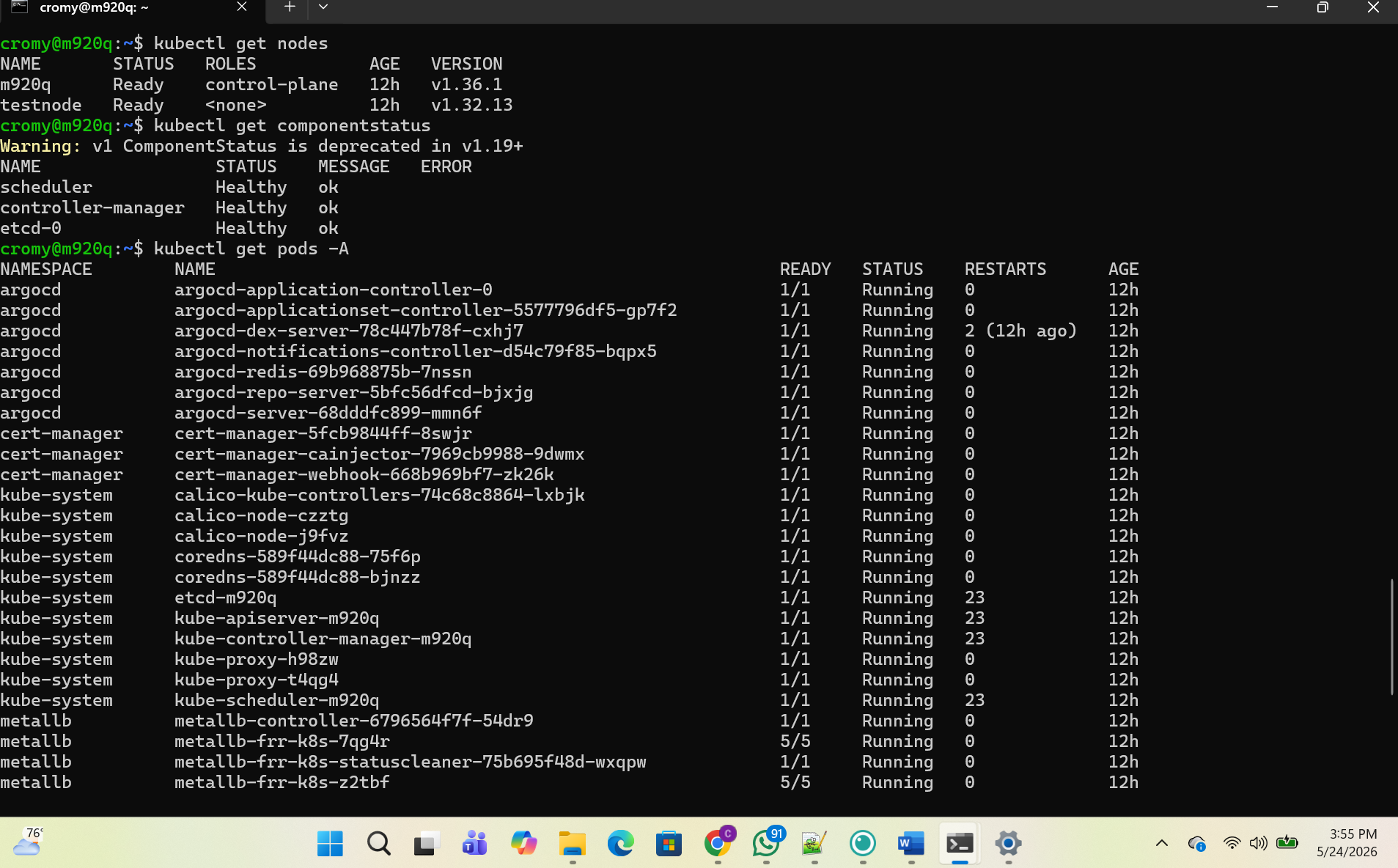
TC-003 two node cluster — both nodes Ready, full stack running

From 10 Days to 30 Minutes: Why I Automated My Bare Metal Kubernetes Cluster

When people ask me what made me decide to automate my homelab cluster, they expect a story about frustration — some late night where everything broke and I snapped. That’s not what happened. The first time I built a bare metal Kubernetes cluster manually, it took me a week and countless hours. Manual steps, configuration files, troubleshooting, and learning. And when it was done, I looked at it and thought: the next evolution of this is automation. Not because I was tired of doing it manually — but because I wanted to be able to reproduce it at a moment’s notice. ...

May 24, 2026 · 7 min · Claude R. Hector
One cable. Two hours.

One Unplugged Cable. Two Hours of Debugging. Here's What Broke My Bare Metal Kubernetes Cluster.

I wasn’t doing anything dramatic. No major deployment. No risky configuration change. I was trying to add a NAS to my homelab. New hardware means more devices, more devices means more outlets, more outlets means buying a power strip. What nobody tells you when you start this journey is that cable management becomes its own project the moment hardware starts multiplying. I ran out of space on my existing surge protector so I needed to plug the new one in somewhere close to the router, close to the switch, close to everything. ...

May 17, 2026 · 5 min · Claude R. Hector
Calico picks the wrong interface. Pod networking breaks silently.

Calico and Tailscale Have a BGP Conflict. Here's Exactly What Breaks and How to Fix It.

If you’re building a bare metal Kubernetes cluster with Calico and you’ve also installed Tailscale for remote access — read this before you spend hours debugging pod networking. I didn’t. I spent the hours. Here’s what I learned. The Setup Four nodes. Two ThinkPad T480s as control plane. Two ThinkCentre M720q desktops as workers. I installed Tailscale on every node so the cluster stays reachable across apartment moves — Tailscale IPs don’t change even when your home network does. ...

April 26, 2026 · 3 min · Claude R. Hector
Genesis1 — Two ThinkPad masters, two ThinkCentre workers. The blog you're reading runs on this.

Project Genesis1: I Built a 4-Node Kubernetes Cluster on Bare Metal. Here's What I Learned.

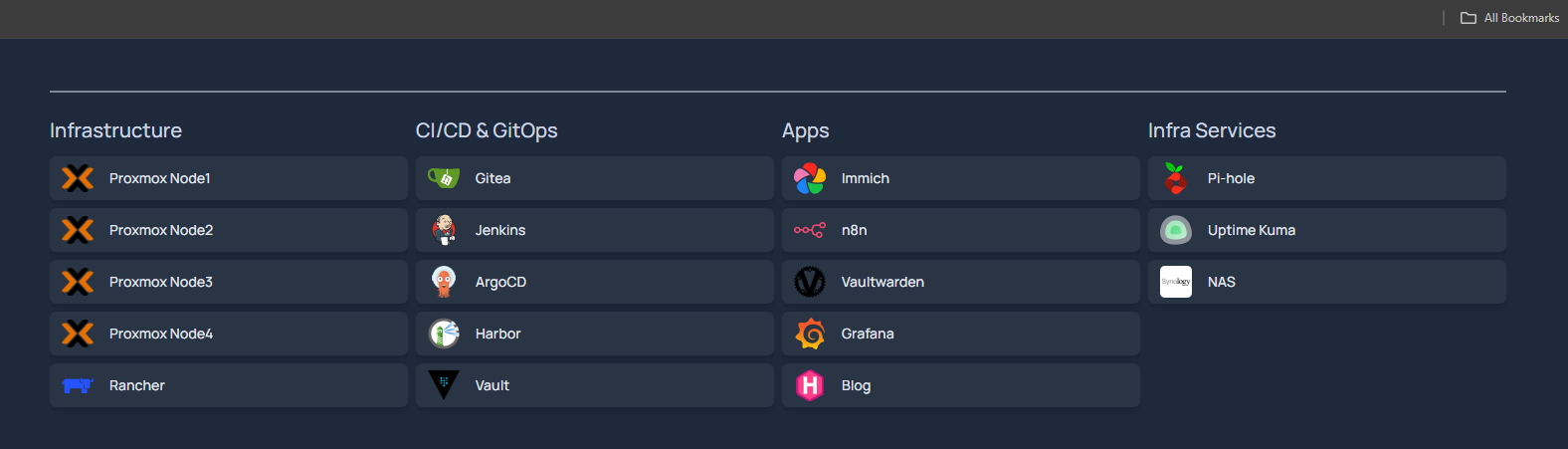
Project Genesis1: I Built a 4-Node Kubernetes Cluster on Bare Metal. Here’s What I Learned. At work, we provision managed Kubernetes clusters. Click a button, get a cluster. Everything abstracted. Everything handled. At home? I built every piece myself. Two control planes. Two workers. GitOps pipeline. Monitoring stack. The blog you’re reading right now? It’s running on this infrastructure. Why build it? To prove to myself I understand what’s underneath the abstraction. To own the gaps instead of hiding them. To build the kind of operational depth that doesn’t come from any exam. This is Project Genesis1. And you’re standing on it. ...

April 13, 2026 · 6 min · Claude R. Hector

Stay in the loop

New posts on platform engineering, Kubernetes, and the homelab journey. No spam.