Beyond The Cert 👋
Platform Engineer | CKA | RHCSA | Building in public. This is where I document the journey beyond the certification — bare metal Kubernetes, homelabs, and enterprise platform engineering.
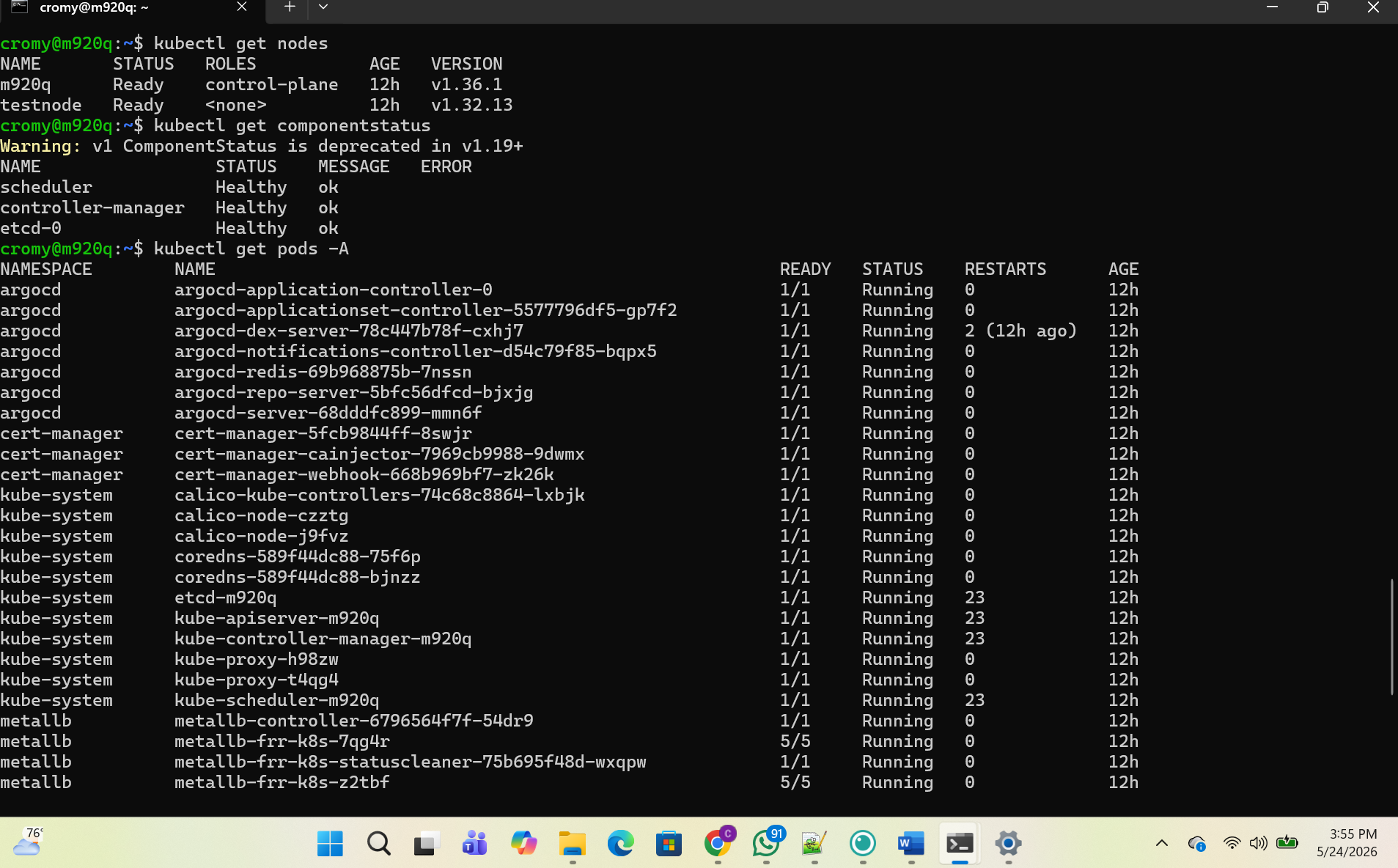
By the time TC-003 came around I’d already proven my Ansible playbooks could stand up a working Kubernetes cluster. One machine, one run, clean output. Figured that was the hard part done. TC-003 — my third test case for validating this automation across different hardware — was supposed to be the easy step before going public with the repo. Lenovo M920Q as the control plane, a Dell laptop joined as the worker, same playbooks that already worked once. Run it, confirm it still works, ship it. ...
Last weekend I moved apartments. Five Kubernetes nodes, a NAS, and a switch came with me. By the time I was done unpacking boxes, the cluster was already back online — and I barely had to touch the network configuration to make it happen. That wasn’t luck. Months ago, when I first built this cluster, I already knew a move was on the table at some point — nothing concrete, just the normal background awareness that apartments don’t last forever. So I made a deliberate call: route the whole cluster over Tailscale IPs instead of local network addresses. I figured if the day ever came, I didn’t want to be reconfiguring DHCP reservations and static routes while also carrying boxes down three flights of stairs. ...
When people ask me what made me decide to automate my homelab cluster, they expect a story about frustration — some late night where everything broke and I snapped. That’s not what happened. The first time I built a bare metal Kubernetes cluster manually, it took me a week and countless hours. Manual steps, configuration files, troubleshooting, and learning. And when it was done, I looked at it and thought: the next evolution of this is automation. Not because I was tired of doing it manually — but because I wanted to be able to reproduce it at a moment’s notice. ...
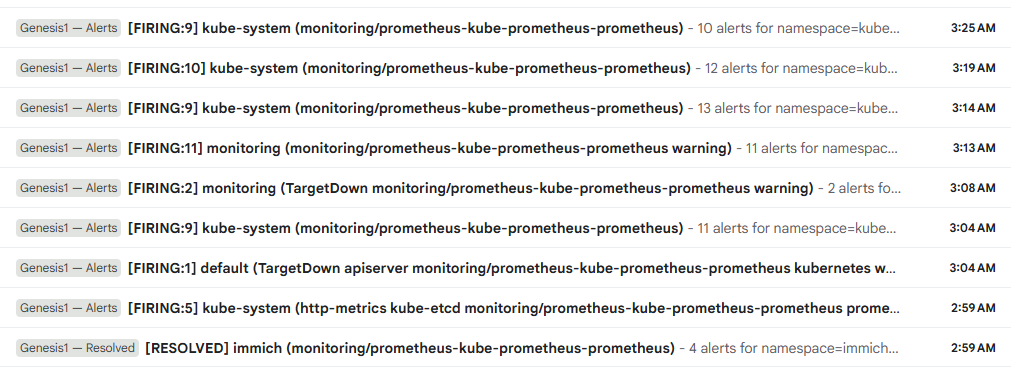
I wasn’t doing anything dramatic. No major deployment. No risky configuration change. I was trying to add a NAS to my homelab. New hardware means more devices, more devices means more outlets, more outlets means buying a power strip. What nobody tells you when you start this journey is that cable management becomes its own project the moment hardware starts multiplying. I ran out of space on my existing surge protector so I needed to plug the new one in somewhere close to the router, close to the switch, close to everything. ...
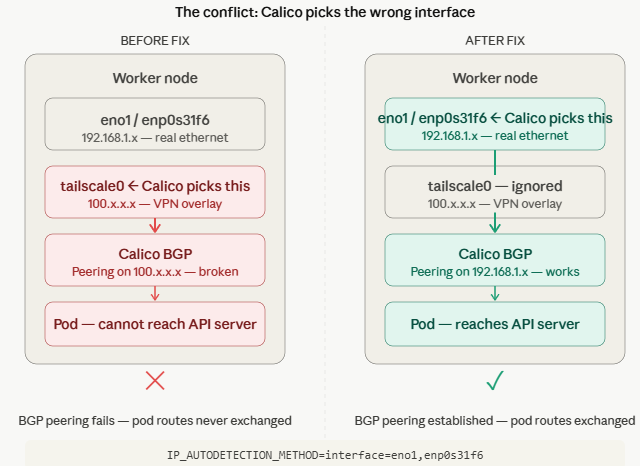
If you’re building a bare metal Kubernetes cluster with Calico and you’ve also installed Tailscale for remote access — read this before you spend hours debugging pod networking. I didn’t. I spent the hours. Here’s what I learned. The Setup Four nodes. Two ThinkPad T480s as control plane. Two ThinkCentre M720q desktops as workers. I installed Tailscale on every node so the cluster stays reachable across apartment moves — Tailscale IPs don’t change even when your home network does. ...
New posts on platform engineering, Kubernetes, and the homelab journey. No spam.